
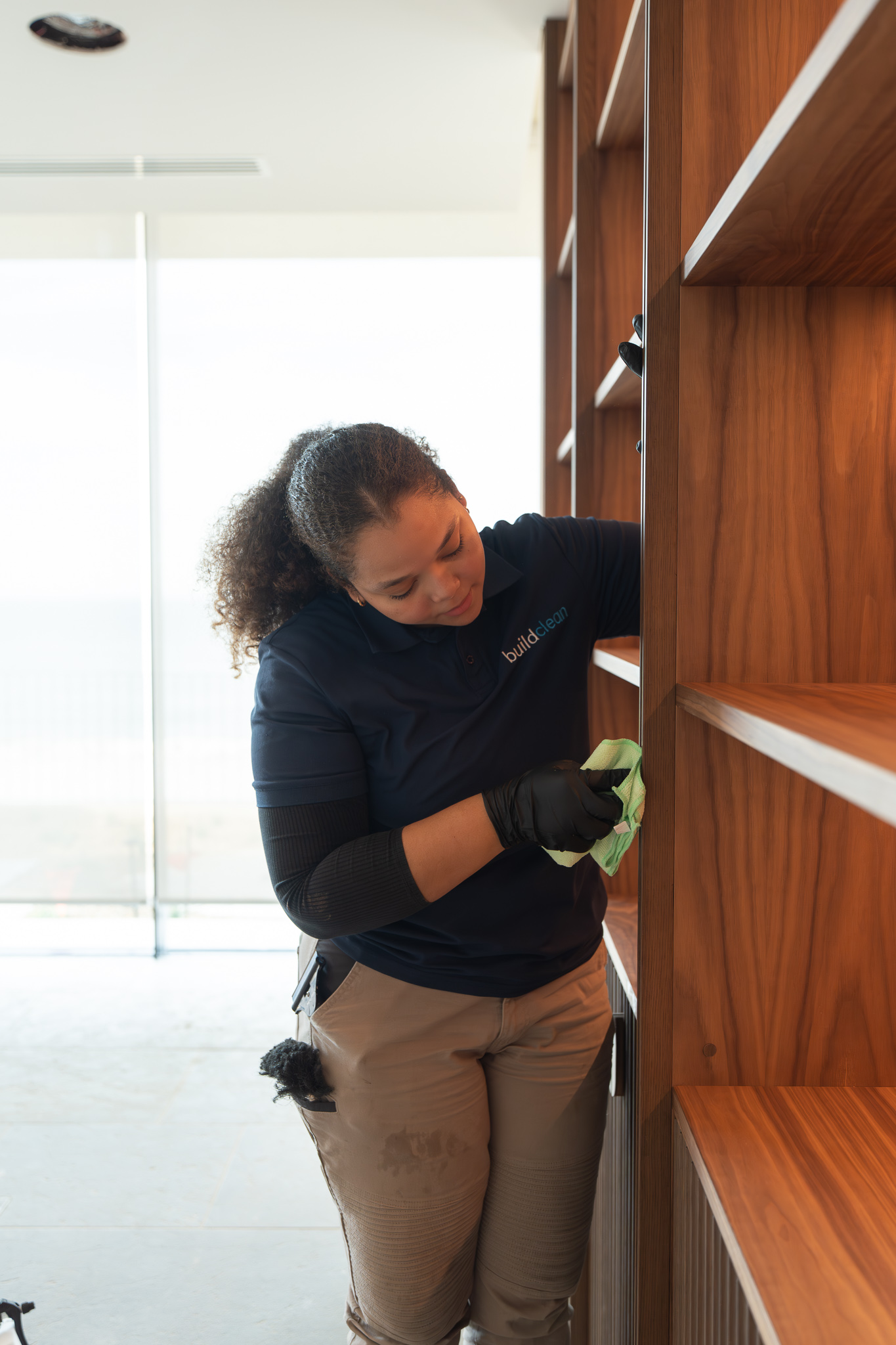
TLDR: Effective dust mitigation during construction handover combines commercial HEPA vacuums, a top-to-bottom cleaning sequence, microfibre extraction, and controlled ventilation. Plaster dust is the primary culprit and settles for days after cleaning unless properly extracted. Build Clean’s standard process eliminates dust to handover-ready standard on every job, with specialty treatments like anti-microbial wet area work available as extras.
Why dust matters at handover
 Construction dust is the single most visible failure of a poor builders clean. A client walks through a “finished” home, runs a finger along a cornice or window sill, and finds plaster dust. Confidence in the build evaporates.
Dust at handover causes:
Effective dust mitigation is the foundation of a professional builders clean. This article covers the methods that work.
The dust sources
Construction dust comes from several sources, each with its own characteristics:
- Plaster dust. The biggest culprit. Sets in carpets, vents, ceiling fans, ledges, and cornices. Fine enough to circulate in the air for hours after a clean.
- Sawdust. From timber work. Coarser than plaster dust but spreads everywhere joiners have worked.
- Gyprock dust. Similar to plaster dust. Sticks to vertical surfaces with static electricity.
- Concrete dust. From floor preparation and any cutting work. Heavy and settles fast.
- Tile dust. From cutting and grouting. Often missed because it’s the same colour as the grout.
- Paint particulates. Atomised paint that has settled on adjacent surfaces.
- MDF and chipboard dust. From joinery cutting. Particularly fine and irritating.
Each needs a specific extraction approach.
The top-to-bottom rule
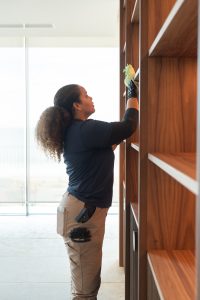 The first rule of dust mitigation is sequence. Dust falls. Cleaning bottom-to-top means dust from above lands on surfaces you’ve already cleaned. The job has to be done twice.
Build Clean’s standard sequence on every job:
Note: Ceilings, exhaust vents, t-bar joints, exposed ductwork, and high level plant room dust sit outside the standard scope. Build Clean offers all of them as tailored extras alongside the standard clean, or refers HVAC duct cleaning to specialist contractors where deeper duct work is required.
Following the sequence eliminates rework and ensures dust isn’t re-deposited.
Commercial HEPA vacuums
Commercial HEPA-filtered vacuums are the difference between dust extraction and dust circulation. A standard domestic vacuum (or worse, a small commercial vacuum without HEPA filtration) catches the visible dust but recirculates the fine particulate that causes the post-clean haze.
A commercial HEPA vacuum filters down to 0.3 microns, catching the plaster dust that domestic vacuums recirculate.
Build Clean operates commercial HEPA vacuums on every site. The difference is visible in raking light on dark surfaces 24 hours after the clean: HEPA-cleaned surfaces stay clean. Non-HEPA-cleaned surfaces show film as the recirculated dust resettles.
Microfibre extraction
Microfibre cloths and pads extract dust mechanically rather than just moving it around. Used dry or lightly damp, microfibre lifts dust off surfaces without scratching.
Cotton cloths and feather dusters move dust without extracting it. The dust gets airborne, drifts, and lands somewhere else.
Build Clean uses microfibre across all surfaces (walls, ledges, cornices, joinery interiors, switches, fittings). It’s slower than a feather duster but it actually removes the dust.
Controlled ventilation
Open windows can speed drying but they also bring in external dust during demolition or external work nearby. Closed windows can trap circulating dust.
The right approach depends on the conditions:
Build Clean operators assess the conditions and ventilate appropriately on every site.
Wet areas: anti-microbial treatment as a tailored extra
Bathrooms, ensuites, kitchens, and laundries can benefit from an anti-microbial treatment because construction dust mixed with construction moisture creates a substrate for mould and bacteria.
Anti-microbial treatment sits outside the standard builders clean scope. Build Clean offers it as a tailored extra alongside the standard clean, particularly valuable on humid-climate projects and on healthcare or aged care work.
When booked, the process:
This is particularly worth considering in humid climates (Brisbane, Sunshine Coast, Gold Coast, Northern NSW) where uncontrolled microbial growth in the first 30 days post-handover can become a defect call-back.
Carpet dust extraction
Carpets are the biggest dust trap on most sites. Plaster dust and gyprock dust sink deep into the pile and a single vacuum pass does not extract it.
Build Clean’s carpet extraction process:
For very heavily contaminated carpets (where trades have worked on top without floor protection), Build Clean recommends a follow-up steam clean before client move-in. This is quoted as an extra.
 Vent and HVAC dust
 Vent and HVAC dust
Air vents and HVAC ducts are often forgotten. Plaster dust sucked into the system during construction circulates when the HVAC is switched on.
Exhaust vents, ductwork, and ceiling-level vent cleaning sit outside the standard builders clean scope. Build Clean offers vent cleaning as a tailored extra alongside the standard clean, and refers deeper HVAC duct work to specialist HVAC contractors where the project needs it.
Frequently asked questions
Almost always because the cleaner used a non-HEPA vacuum and didn’t extract fine particulate. The visible dust was removed but the airborne dust resettled within hours.
Can you guarantee a dust-free handover? Build Clean delivers a handover-ready standard on every job. We document this with the final walk-through and provide a touch-up within the agreed window if any issues come up.
Do you clean inside HVAC ducts or exhaust vents? Exhaust vents, ductwork, and similar elements sit outside the standard builders clean scope. Build Clean offers vent cleaning as a tailored extra alongside the standard clean. For deep HVAC duct cleaning we refer to specialist contractors with the equipment for that work.
What about post-clean air quality? Build Clean’s HEPA filtration and proper extraction process means air quality after the clean is significantly better than after a non-professional clean. For sensitive clients (asthma, allergies), additional measures can be discussed at quote stage.
How long after the clean before move-in? A properly executed Build Clean handover is ready for client move-in immediately. There’s no airing-out period required.
Do you use harsh chemicals? Build Clean uses pH-neutral and finish-appropriate products as standard. Strong chemicals are only used where the surface requires it (silicone removal, specific stain treatment) and always with the right finish-specific approach.