TLDR: Multi-storey commercial cleaning at handover requires the right access method (EWP, scaffolding, water-fed pole, or rope access) matched to the building and the scope. Operators need EWP and Working at Heights certifications. Coordination with the principal contractor on access, lift bookings, and safety zones is critical. Build Clean delivers multi-storey commercial handovers nationally with certified operators and equipment.
Why multi-storey access matters
 A multi-storey commercial handover is fundamentally different from a single-level residential clean. External glazing can sit 20+ metres above ground level. Internal atrium glass needs lift access. Heritage facades need careful handling. Safety zones need to be enforced.
The wrong access method creates one of two problems:
Both end at the principal contractor’s desk. This article covers the access methods used in multi-storey commercial cleaning and how to spec the right one.
The four main access methods
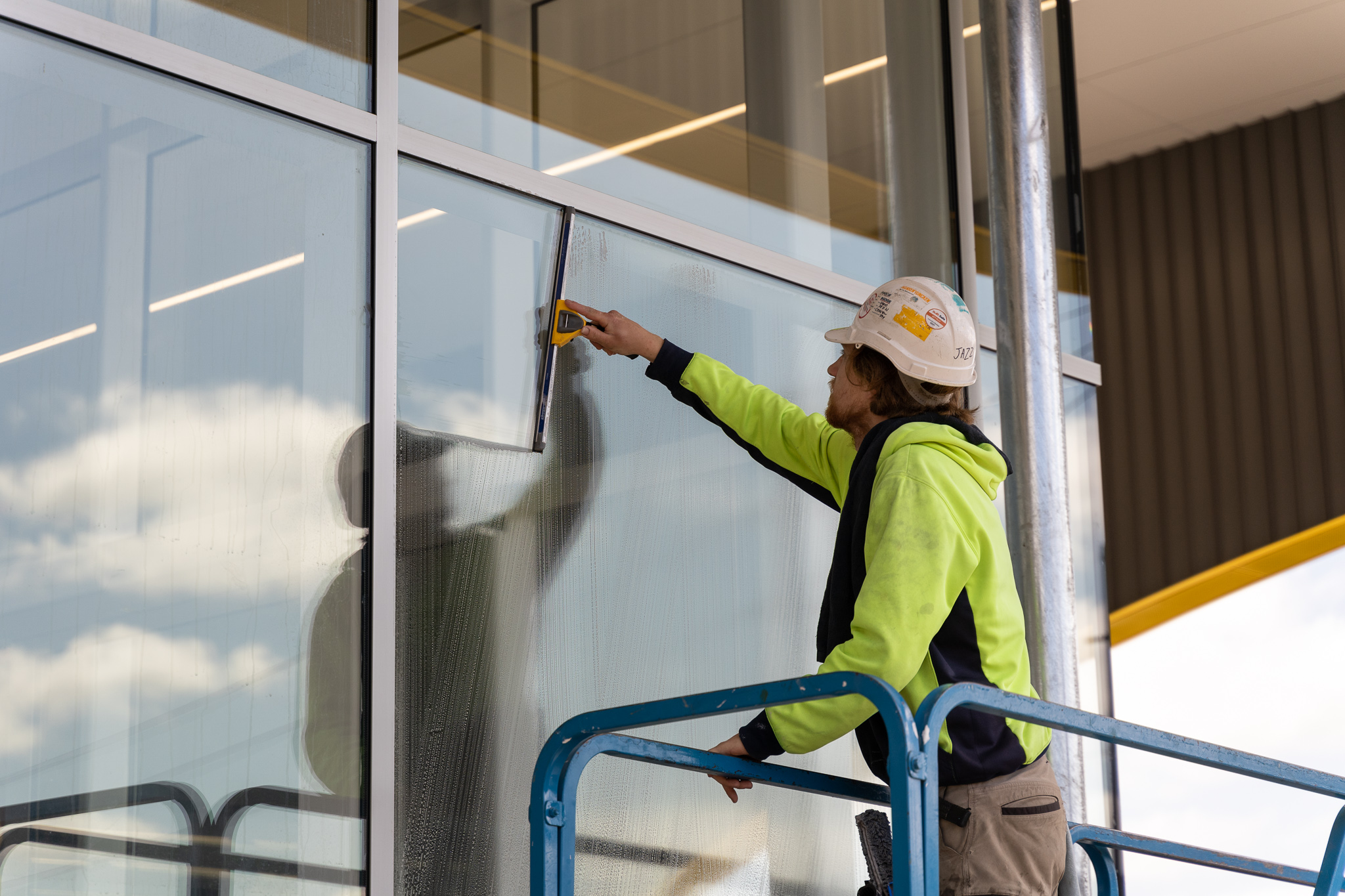
1. Elevated Work Platform (EWP). Scissor lifts and boom lifts. Most common for external multi-storey work up to 30 metres. Allows operators to reach external glazing, signage, and facade detail. Requires EWP-certified operators and a flat, stable surface to operate from.
2. Scaffolding. Used for very large external facades, complex geometries, or extended-duration work where EWP doesn’t suit. Slower to set up but allows multiple operators to work simultaneously.
3. Water-Fed Pole (WFP). Long carbon fibre poles with deionised water systems. Operators clean from ground level up to 20 metres. Fast and safe for tall external glazing. Works best on simple geometries.
4. Rope Access. Specialist abseilers descending from rooftop anchor points. Used for high-rise (above 30 metres) where EWP doesn’t reach and scaffolding isn’t viable. Requires IRATA-certified operators.
Build Clean uses EWP, water-fed pole, and scaffolding-coordinated cleans as standard. Rope access work is referred out to specialist abseiling contractors where required.
Choosing the right access method
 The choice depends on five factors:
 The choice depends on five factors:
Building height. Up to 12 metres: EWP or WFP. 12 to 30 metres: EWP, WFP, or scaffolding. Above 30 metres: rope access or scaffolding.
Building geometry. Simple rectangular facades suit WFP and EWP. Complex curves, recesses, and overhangs may need scaffolding or rope access.
Site access. EWP needs a stable, flat surface to operate from. Tight inner-city sites may not have the space. WFP works from any flat surface.
Scope. A quick external window clean suits WFP. A full external facade clean with detail work suits EWP or scaffolding.
Program. EWP and WFP are fast. Scaffolding needs setup and dismantle time, often a week each way.
Certifications required
Every operator on a multi-storey site needs:
Operators using scaffolding need to be inducted on the specific scaffold by the scaffold provider. Operators using rope access need IRATA certification (Build Clean refers this work out to certified specialists).
Build Clean issues White Card, Working at Heights, and EWP to every operator before site access.
Coordinating with the principal contractor
Multi-storey cleans need close coordination with the principal contractor’s site team.
Five things to lock in before the crew arrives:
1. Lift access. Internal lifts need to be booked for crew and equipment movement. Goods lifts are preferred for transporting equipment.
2. Safety zones. External work requires ground-level safety zones to be enforced. Other trades and the public need to be kept clear.
3. Operating windows. Some buildings restrict noisy or visible work to specific hours (especially mixed-use buildings with apartments above retail).
4. Anchor point inspection. For rope access work, anchor points need to be certified before use.
5. Weather contingency. External work stops in high winds (typically above 32 km/h) and lightning. The principal contractor needs to expect weather-driven delays.
Build Clean’s project coordinator manages all five with the principal contractor’s site supervisor before the crew arrives.
Scope on a typical multi-storey commercial clean
External glazing. – Internal and external clean of all glass – Frame cleaning (anodised aluminium, powder-coated steel, painted timber) – Track and sill cleaning – Hardware polish – Silicone smear removal – Salt residue removal on coastal buildings
External facade detail. – Cleaning of metal cladding, render, exposed concrete – Signage cleaning and polishing – Awning and shade structure cleaning where required
Internal multi-level work. – Atrium glazing – Lift lobby glass – Stairwell glazing – Skylights from ground side – Internal balcony glazing
Detail work at height (within scope). – Light fittings where easily accessible – Ceiling-level signage and architectural detail where within standard scope – Note: ceilings, exhaust vents, t-bar joints, exposed ductwork, and HVAC grilles sit outside the standard builders clean scope. Build Clean offers all of these as tailored extras alongside the standard clean.
 Pricing for multi-storey commercial
 Pricing for multi-storey commercial
Multi-storey commercial cleaning is not priced on a single per-m² figure.
Pricing varies with:
- Building height and geometry
- Access method required
- Scope of external work
- Program (single visit vs phased commissioning)
- Coordination requirements with the principal contractor
Build Clean provides fixed-price quotes for multi-storey commercial work. Variable scope is charged at the hourly rate. Industry hourly rates for builders cleaning in Australia sit between $70 and $90 per hour. EWP hire and operator time are factored into the quote upfront.
Frequently asked questions
Do you provide your own EWP equipment? Build Clean operators are EWP-certified and we coordinate equipment hire as part of the quote. Some larger commercial sites have EWP on hire already as part of the construction program, which can be coordinated.
What height can you reach with water-fed pole? Standard WFP systems reach up to about 20 metres. Above that, EWP, scaffolding, or rope access is required.
Do you do rope access work? Rope access work is referred to IRATA-certified specialist contractors. Build Clean coordinates the work where it’s part of a larger handover but does not perform rope access in-house.
What insurance covers multi-storey work? Build Clean’s $20 million public liability insurance covers all multi-storey work performed by directly employed operators. Specialist rope access contractors carry their own insurance which is verified before engagement.
Can you work after-hours in a tenanted building? Yes. Mixed-use buildings with restricted hours are common in commercial handover work. Build Clean schedules crews to suit the operating window.
How do you handle weather delays on external work? External work stops in high winds and lightning. Build Clean monitors forecasts and reschedules with the principal contractor’s site team. Quotes include reasonable allowance for weather risk.